- For example, words such as Alphabet, Bath, Camel, and Cider, all originate from the Hebrew Language.
- According to Hebrew language scholar Dr. Isaac Elchanan Mozeson's conclusions, "... English and Hebrew are profoundly connected. " Mozeson also states that many other words in the English language should be deemed Hebrew by origin. (http://ensignmessage.com/archives/hebrew1.html)
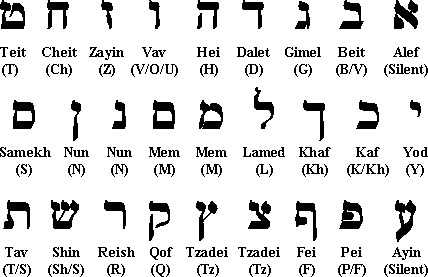
But when did Hebrew begin to matriculate into the Old English Language?
During the age of the Renaissance in the 17th Century, Religious scholars took deep interest in the Old Testament, written in Sematic characters. Along with this popular interest, People in England, especially those involved in the Puritan movement under Oliver Cromwell, believed Hebrew to be "The Mother of Languages." Thus, Hebrew was set at a different level. Cromwell even gave the position of Secretary of Foreign Language to the poet and dedicated Hebraist John Milton.
Below is a direct quote from the article "The Mother of Languages" by Norman Berdichevsky.
The contribution of Hebrew is less obvious but often overlooked precisely because it has become so familiar in its anglicized forms. The foremost Jewish historian of our time, Cecil Roth, had this to say:
"Generation after generation of Englishmen heard the Bible read in church and studied it at home. In many cases, it was the only book; in all, the principal book. At last its cadences, its music, its phraseology, sank into his mind and became part of his being... Hence by slow degrees his daily speech was not merely enriched, but to some extent moulded by its influence."

No comments:
Post a Comment